Showing posts with label Technology. Show all posts

Monday, December 19, 2011

German village generates 321 percent more renewable energy than it needs, earns millions selling it back to national power grid

(NaturalNews) Developing a renewable energy system that creates energy independence and even a considerable new source of revenue is not some sort of sci-fi pipe dream. BioCycle reports that the German village of Wildpoldsried, population 2,600, has had such incredible success in building its renewable energy system. Wildpoldsried generates 321 percent more renewable energy than it uses, and it now sells the excess back to the national power grid for roughly $5.7 million in additional revenue every single year.

By utilizing a unique combination of solar panels, "biogas" generators, natural wastewater treatment plants, and wind turbines, Wildpoldsried has effectively eliminated its need to be attached to a centralized power grid, and created a thriving renewable energy sector in the town that is self-sustaining and abundantly beneficial for the local economy, the environment, and the public.

Possessing admirable vision for the town and strong motivation to see the project as a whole succeed, Mayor Arno Zengerie has led the way for many years in making Wildpoldsried's energy independence efforts a success. As far back as 1997, the village has been investing in building and promoting new industries, maintaining a strong local economy, generating new forms of revenue, and ultimately staying out of debt. And the best way it saw fit to accomplish much of this was through the implementation of self-sustaining, renewable energy technologies.

Not only did Wildpoldsried successfully reduce the amount of time expected to generate the necessary funds to build local treasures like a sports hall, theater stage, pub, and retirement home with the revenue generated by its thriving renewable energy sector -- the village has already successfully built nine community buildings, with more on the way -- but it also achieved all this and more without going into debt.

"We often spend a lot of time talking to our visitors about how to motivate the village council (and Mayor) to start thinking differently," said Mayor Zengerle, who now gives talks around the world about the successes of his award-winning village. "We show them a best practices model in motion and many see the benefits immediately. From the tour we give, our guests understand how well things can operate when you have the enthusiasm and conviction of the people.
Learn More at the original post:
http://www.naturalnews.com/034440_renewable_energy_Germany_power_grid.html#ixzz1gzjysxzh

Friday, September 23, 2011

Advanced wind turbine design eliminates need for environmentally-harmful rare earth metals, generates electricity at $0.04 per kWh

Written Thursday, September 22, 2011 by: Jonathan Benson | NaturalNews.com


(NaturalNews) The bumbling, inefficient reputation of current wind energy technology just might get the game-changing overhaul it needs to become a viable form of clean energy production, thanks to a new permanent magnet generator (PMG) design created by Boulder Wind Power (BWP).


According to a recent report by Green Tech Media, the budding technology does not require the use of expensive, environmentally-damaging rare earth metals typically imported from China, and it also generates electricity at a lower cost than traditional coal-burning plants are able to do.

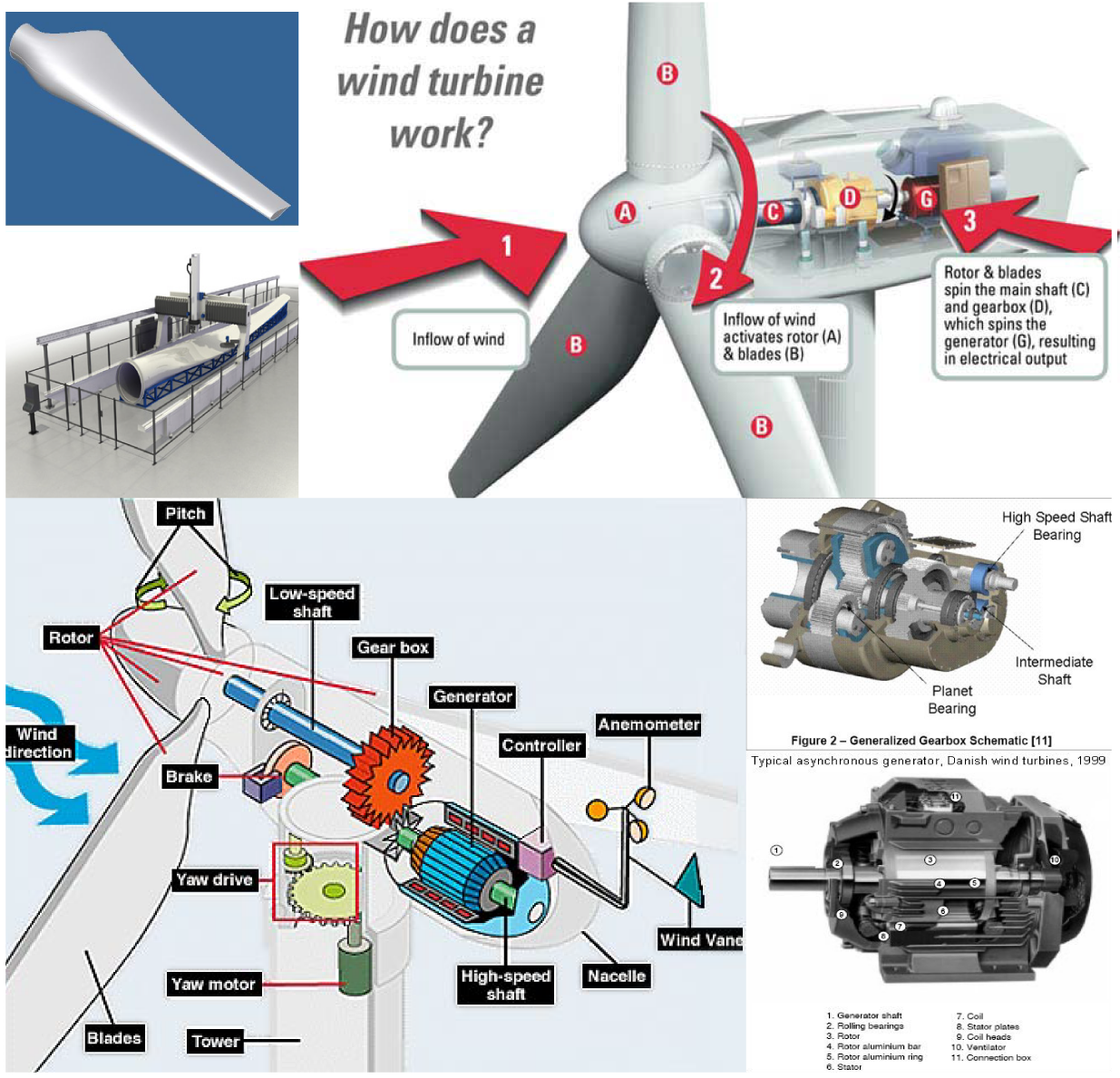
Most wind turbines in use today rely on complicated gearboxes that run at high temperatures, that wear out easily, and that are difficult and expensive to maintain. They also require the use of dysprosium, an expensive, rare-earth metal obtained from China, a country whose track record of environmental friendliness leaves much to be desired (http://www.naturalnews.com/028160_r...).

In other words, the lofty price of dysprosium, which can run as high as $2,000 per kilo (2.2 pounds), combined with the frequent need to maintain and replace a slew of intricate turbine parts, has made current wind energy production technologies inadequate and unable to compete in the energy market apart from government subsidization.

The PMG design, however, eliminates the gear-driven system, which BWP describes as "a bunch of very high precision, high quality steel parts in a gear box," with a direct drive system that is "basically one big moving part." And since this single part relies on neodymium, which is one-twentieth the price of dysprosium, and mined in California using an environmentally-friendly extraction process, its potential to replace current wind energy technologies is essentially a given.

But the biggest reason why the PMG wind design is sure to take off is that it actually produces energy for less than both current wind energy technologies and traditional coal technologies do. With the capacity to produce energy at a cost of roughly $0.04 per kilowatt-hour (kWh), without government subsidization, PMG's economic viability alone is enough to eventually propel it to the forefront of the clean energy market.

"We're not inventing new science," said BWP CEO Sandy Butterfield. "We don't expect the rotor to change. We don't expect the tower to change. The nacelle -- everything between the tower and the rotor -- will have significant changes. But it's all mechanical engineering."


Click for full view

Sunday, August 21, 2011

'Making science-fiction a reality': Bulletproof human skin made from spider silk and goat milk developed by researchers

From dailymail.co.uk | August 16th 2011

Researchers genetically engineered goats to produce milk which is packed with the same protein as silk spiders.
Once this is milked out it can be spun out and weaved into a material that is ten times stronger than steel.
The fabric can then be blended with human skin to make what the scientists hope will be tough enough to stop even a bullet.


Wednesday, July 6, 2011

Cold fusion devices produce far more energy than they use; quickly approaching commercial viability

(NaturalNews.com) "Cold fusion is real, but mass American news sources are not covering it. Experiments are currently being duplicated across the world, to add further verification to the body of scientific proof. It is now possible to create energy with commonplace resources at no cost to the environment. Power plants using cold fusion will be constructed before 2012.


Natural News has been covering the developments of cold fusion for quite some time, as controlled experiments in Russia, California, Italy, and Japan have consistently proven that cold fusion is real. (Read one of the original articles here (http://www.naturalnews.com/013281.html).)

One of these successful experiments was conducted by Professor emeritus of Osaka University, Japan - Yoshiaki Arata. Dr. Arata performed a demonstration of cold fusion at Osaka. A colleague of his wrote, afterward: "Arata's demonstration was successfully done it demonstrated live data looked just similar to the data they reported in [the] papers. This showed the method highly reproducible." Read the original article for more details at (http://www.sott.net/articles/show/1...).

In addition, Andrea Rossi's Fusion Energy Catalyzer was tested in a number of different scenarios this year, resulting in a stronger belief that cold fusion may be ready for public use by the end of 2011. On January 14, Focardi and Rossi held a press conference, discussing their 10-kW generator. Another experiment, which took place roughly a month later at the University of Bologna, reported the model generated 15 kW for 18 hours. There are currently plans to hook up roughly 200 of these smaller units, in order to construct two 1 megawatt-producing power plants before the end of the year. If these plants perform up to their potential, then we can hope for the construction of industrial-sized power plants within another year or two.

But how does it work?

Cold fusion is not really magical, even though it could very well have a miraculous effect on our future. It is a relatively simple chemical reaction that produces excess heat, meaning that if the reaction occurs in water, it will increase the temperature of the water. Powdered nickel fuels the reaction. You put in nickel (one of the most plentiful metals on the planet), and you get heated water.

After that point, almost every mechanic in the world would be able to take it from there. Steam engines heat water with coal, then using the expansive properties of the steam to power turbines. A cold fusion device would use the same basic mechanical devices, but it would heat the water through the consumption of nickel rather than combustion.

But why has news of cold fusion not yet reached mass media in the United States? Why is there no story in the New York Times that showcases all of this excitement and buzz?

The media has been burnt by the dream of cold fusion before. In 1989, Fleishman and Pons first conducted a series of experiments on cold fusion and produced some truly exciting results. In their excitement, they let their findings slip a little too early, before they had been able to thoroughly study the discovery, or realize consistently positive results. They released their miraculous findings, with claims of having discovered the dream machine of the millennium, and they caused a lot of excitement in the scientific community, at least at first.

But they had fallen prey to their own unbridled enthusiasm. Confronted with the potential of what they had discovered - a future resplendent with clean, free energy - they jumped the gun a little prematurely. Their method was reproduced across the globe, but many experiments fell flat. In fact, their method was shown to be effective only 30% of the time. And in the world of empirical fact, 30% is an error, not a discovery. It was supposed that the 30% of experiments that did corroborate Fleishman and Pons' findings were more likely the result of bribes or 'friendships,' not cold fusion.

Consequently, it was presumed that Fleishman and Pons were frauds, just a couple of jingoists desperately attempting to gain fame and attention. Cold fusion was thought to have been revealed as a hoax, and the scientists became notorious. All but excommunicated, Fleishman and Pons went underground, where they continued to hone their method and make the process easily replicable and consistent. They checked and double-checked their findings, and they spread their idea to other scientists willing to conduct more thorough investigations, such as Andrea Rossi, whose device has, so far, produced the consistency that Fleishman and Pons' lacked.

This discovery could not come at a better time for the world, when oil resources are quickly becoming scarce, and greenhouse gas emissions are continuing to spike, despite the damage they are causing.

So, given the reason for optimism in this period in which energy is particularly expensive, why is the mass media refraining from mentioning cold fusion. Why is it not on the front pages of every newspaper?

There are a number of possible explanations. First, the scientific community's pause could very well be a consequence of the unbridled enthusiasm given by the initial experiments conducted in 1989. After such a humiliation, it is easy to see why scientists would remain skeptical, at least on the surface. Meanwhile, Rossi's Energy Catalyzer is being slated for reproduction in large-scale, cold fusion reactors later this year. If you compare the pace of Rossi's tests to the scientific norm, then it is clear that scientists are, indeed, excited.

As for the press, there are more insidious explanations to be considered. For one, it is a distinct possibility that a number of enormous businesses, such as oil and coal companies are leaning on mass media sources to keep quiet. Cold fusion power plants would drop the price of energy, thereby putting energy companies out of commission. It is in their best interest to slow down the process of integrating cold fusion.

But whatever the reason for mass media silence, you can expect to start hearing about cold fusion by the end of the year. By then, it will be impossible to keep quiet a discovery of this magnitude."


--------------------------------------------------------------------------------------------------------------


It's amazing how many problems could be fixed with this technology!

Friday, July 1, 2011

Super-efficient, low-cost inkjet system to revolutionize solar energy technology


(NaturalNews.com) The same technology used in your home or office printer to deliver ink to paper is now being used in a revolutionary new solar technology that eliminates 90 percent of raw material waste, and drastically cuts the costs associated with producing solar cells.

Engineers from Oregon State University (OSU) are well on their way to producing the first ever super-efficient, extremely low-cost solar film made from inkjet technology, which could make solar energy production a whole lot more efficient and cheaper for consumers
Published in the journal Solar Energy Materials and Solar Cells, the findings explain how CIGS solar devices -- CIGS being short for the copper, indium, gallium and selenium elements that compose them -- drastically reduce waste, significantly improve efficiency, and summarily revolutionize the way solar cells are produced, as well as how they perform.

...The technology is different from typical solar cell production in that it precisely prints the relatively inexpensive chalcopyrite compound, or CIGS, directly on film as thin as one or two microns -- and it does this without losing much energy, or wasting much of the element compound. Traditional solar technology, on the other hand, involves the use of more expensive compounds that are deposited using processes such as vapor phase deposition, which is very inefficient and ends up wasting most of the element compound.

"Some of the materials we want to work with for the most advanced solar cells, such as indium, are relatively expensive," noted Chang. "If that's what you're using, you can't really afford to waste it, and the inkjet approach almost eliminates the waste."

Besides being highly efficient and easy to produce, inkjet technology opens the door for the greatly expanded use of solar systems in building materials like roofing shingles, windows, and other surfaces exposed to regular sunlight -- the possibilities are endless.....

--------------------------------------------------------------------------------

This in combination possibly with non-rare-earth metal solar technology and you have dirt cheap solar!

Monday, June 6, 2011

The tent that turns into concrete in less than 24 hours (Link, Video)

Among new innovations which could help relief efforts is a fabric shelter that, when sprayed with water, turns to concrete within 24 hours.
Invented by two engineers while at university, Concrete Canvas allows aid teams to construct solid structures in emergency zones quickly and easily.
Will Crawford and Peter Brewin showed BBC News how the concrete tent is put together and spoke about what inspired them.

http://www.bbc.co.uk/news/technology-13430747

Thursday, April 21, 2011

Transparent Photovoltaic Cells Turn Windows Into Solar Panels

(Don't forget to see my last post! I added this one accidentally and I can't get it off, lol)
Written by John Collins Rudolf, on April 20th, 2011, Here: nytimes.com.


A new class of transparent photovoltaic cells has been developed that can turn an ordinary windowpane into a solar panel without impeding the passage of visible light, scientists said Tuesday.
The cells could one day transform skyscrapers into giant solar collectors, said Richard Lunt, one of the researchers on the project.
“We think there’s a lot of potential to be able to integrate these into tall buildings,” Dr. Lunt, a postdoctoral researcher at the M.I.T. Research Laboratory of Electronics, said in an interview.


Mr. Lunt demonstrating the transparency of the new solar cell
Previous attempts at transparent solar cells have either failed to achieve high efficiency or blocked too much light to be used in windows. But the new cells, based on organic molecules similar to dyes and pigments, are tailored to absorb only the near-infrared spectrum and have the potential to transform that light into electricity at relatively high efficiency.
The current efficiency of the prototype cells is only about 2 percent, but some basic modifications, like stacking the cells, could increase efficiency to around 10 percent fairly easily, Dr. Lunt said.
The largest challenge in developing commercial applications for the new solar cells will be longevity. The cells could be packaged in the middle of double-paned windows, which would provide protection from the elements. But the longevity of the cells would still need to approach the life span of the windows themselves, which would not be replaced for decades.
“To make this thing truly useful, you do need to extend the lifetime, and make sure it reaches at least 20 years, or even longer than that,” said Vladimir Bulovic, a professor of electrical engineering at M.I.T. who collaborated on the development of the cells.
Mr. Bulovic said that previous work to extend the life span of organic light-emitting diodes, or LEDs, which share properties with the organic solar cells, indicated that the problem of longevity was not an extraordinarily difficult one.
“It appears at this point that this is an engineering problem,” he said. “I would expect that within a decade those will be solved issues.”

If the cells can be made long-lasting, they could be integrated into windows relatively cheaply, as much of the cost of conventional photovoltaics is not from the solar cell itself, but the materials it is mounted on, like aluminum and glass. Coating existing structures with solar cells would eliminate some of this material cost.
If the transparent cells ultimately prove commercially viable, the power they generate could significantly offset the energy use of large buildings, said Dr. Lunt, who will begin teaching at Michigan State University this fall.
“We’re not saying we could power the whole building, but we are talking about a significant amount of energy, enough for things like lighting and powering everyday electronics,” he said.
The Center for Excitonics, an Energy Frontier Research Center financed by the Department of Energy, provided funds for the research. A paper describing the technology behind the cells will appear in the next issue of the journal Applied Physics Letters.


Wednesday, April 20, 2011

University of Michigan researchers find a way to make solar power without solar cells, finding could mean cheaper solar technology

Written by Amanda H. Miller HERE, on Apr 20, 2011

Solar electricity has traditionally meant solar cells and solar panels, but researchers at the University of Michigan have discovered a new way to generate power from the sun without using traditional methods.
In finding a new way to capture the sun’s energy, Professor Stephen Rand and doctoral student William Fisher disproved age-old theories about how light behaves. They found a way to create an “optical Battery” capable of using the sun’s magnetic powers to generate power, according to a press release from the university.

“We simply chose to ignore one of the standard assumptions in optics, that the magnetic field of light is too weak to have a notable effect in almost every situation, and see what could happen,” Fisher wrote in an e-mail.
Fisher said that he and Rand did not set out to find a new way of generating solar power, it was the happy byproduct of their research on optical magnetism, he wrote.
Fisher and Rand discovered that when light is traveling through a material that does not conduct electricity, the light field can generate magnetic effects 100 million times greater than scientists previously believed, according to the press release.
“This could lead to a new kind of solar cell without semiconductors and without absorption to produce charge separation,” Rand was quoted in the release.
In order for the rectification process to work, a light must be shone through a material that doesn’t conduct electricity like glass or porcelain and be focused to an intensity of 10 million watts per square centimeter, according to the release.
“The intensity discussed in the press release is beyond what can be achieved with sunlight,” Fisher wrote in his e-mail, “so we would like to find materials in which this threshold is much lower. Preliminary results from other experiments have shown that this may be possible, but many engineering problems remain.”
Looking for new materials and trying to increase the energy output will be on top of the researchers’ lists as the project moves forward. And one day, this new science could be transformed into a new solar power generation system that uses fewer minerals, a simpler construction process and less expensive every-day materials.
“At the moment this does not appear to be a more efficient way to generate solar power,” Fisher wrote, “but the use of simple dielectric materials could reduce the cost compared to current techniques.”

Image courtesy of NextBigFuture.com

Friday, April 15, 2011

Digital Film (Possible Technology?)


RE-35 Digital-film

I saw an article about a piece of new tech recently that would turn film cameras into digital ones (which is pretty cool).
I have a Konica-Minolta that I could use it in too, but as I was reading into the article and the comments I found out that it was something a company put out as an April Fool's prank, and never intended for actual production.
Here's a bit of the article below and the message from the "inventor" of the technology:


"For photographers who are attached to their analog equipment but can no longer resist the pull of the digital age, RE35 proposes a solution: a digital cartridge that fits into any 35mm camera and connects to your computer via USB.
"The RE-35 cartridge, in place of film, has a pull-out “sensor” that captures the images and saves them to flash memory within the cartridge. When plugged in to a computer, the cartridge charges and transfers images with built-in software."

All in all it sounds like a pretty cool piece of equipment, but here is what the producer had to say about it:

"Thankyou for your enquiry about Re35.
Some good news:
The feedback to our "product" has truly been overwhelming. It seems Re-35 really addresses a need and people worldwide can't seem to wait to get their hands on our "product".

The bad news:
Some things are to good to be true!
Re35 does not really exist. We (the design company Rogge & Pott) created Re35 as an exercise in identity-design. We invented the "product" because it was something that we had wished for for a long time (as many others).
We launched the website and sent out "press releases" on April first - thinking, that the date would make clear, that Re35 is just wishful thinking - a classic April Fools Prank!

However:
All this attention Re35 ist getting might actually be good for something. It proves, that there is a gigantic community of photographers with analog equipment out there that is desperately waiting for a product like this to come along.

We hope there are no hard feelings
and that you are not too disappointed.


Cheers from Germany.
Henning Rogge
"

Too bad! Would have been nice to get digital images off of manual cameras.

To view the the full article on PopularScience, go here (http://www.popsci.com/gadgets/article/2011-04/35-mm-usb-cartridge-makes-film-cameras-digital)

Thursday, March 17, 2011

Technology - L.E.N.R.

Hey everyone! This is my first Technology post.

I was looking at an article the other day that was discussing Japan's electrical future. If/when this current crisis ends I highly doubt the Japanese citizens will allow their government to continue using nuclear power (and I wouldn't blame them). However, Japan cannot fully switch to Solar Power to replace the nuclear, they just do not have the land mass to place all those panels! Also, with Rare Earth Metals being on the squeeze from China (for those who don't know, Rare Earth Metals are used in a lot of modern high-tech devices. China dominates over 90% of the market because they have huge sources within main-land China, and they lately have been limiting what they export so the US and others have been scrambling to find their own sources) it would make switching to solar so much more difficult.
I read an article, and I'm not totally sure of it's usefulness, but there was an alternative technology mentioned called LENR (Low Energy Nuclear Reactions, also known to some as "Cold Fusion"). Now, this technology has been around for some time (1989), but it has been suppressed by the mainstream Nuclear scientists till now. Some of our US Navy researchers having been playing with the technology and supposedly it works similarly to "Hot Fusion" by boiling water into steam to run turbines but without the radioactive waste (which would be pretty useful for Japan). The only thing is that it takes more time for it to warm up, or something, lol. For more information refer to this link by Mike Adams of NaturalNews dot com. (http://www.naturalnews.com/025925_cold_fusion_science_Amazon.html)


Hope somebody enjoyed that, lol.
~GT